
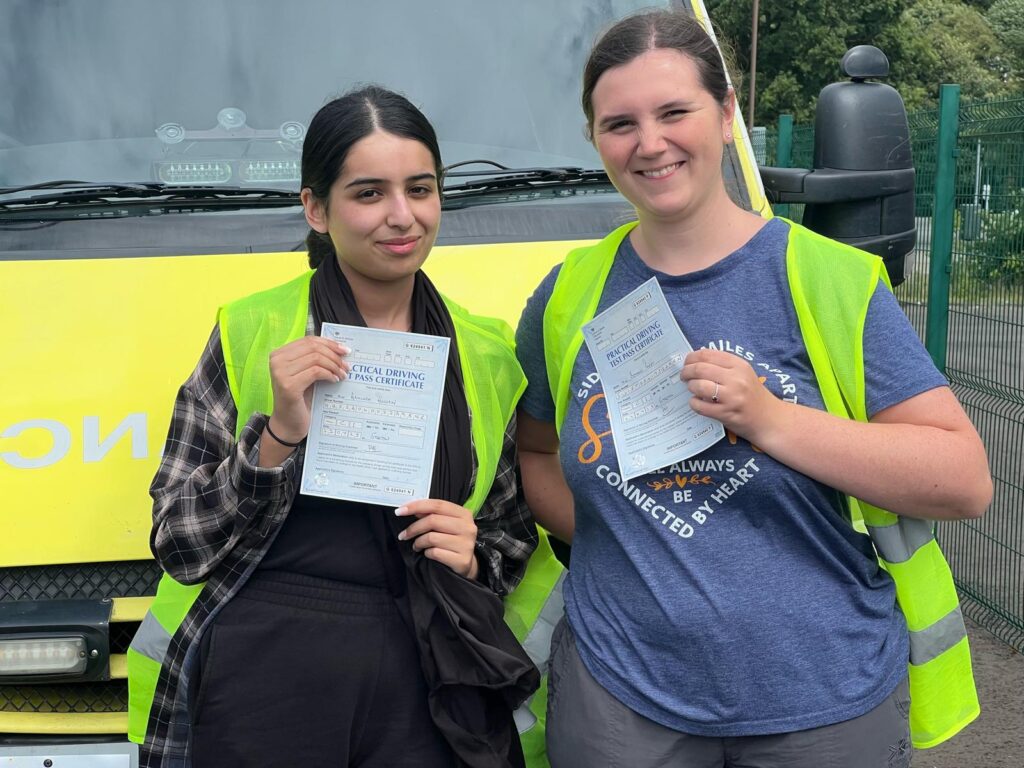
Stepping up from a standard car to a medium-sized goods vehicle is a significant and exciting milestone. Whether you are an aspiring student paramedic preparing for your future career, a delivery driver looking to upskill, or simply someone wanting to drive a large motorhome for a weekend getaway, obtaining your C1 driving licence is the essential first step.
However, making the leap from a standard hatchback to a 7.5-tonne vehicle is not as simple as just turning the key and pulling out of the depot. The sheer size, weight, and handling characteristics of these vehicles require a completely different mindset. Countless candidates underestimate the jump in skill required, leading to frustrating test failures, wasted money, and shattered confidence.
In this comprehensive guide, we are going to explore the common mistakes in C1 driver training in the UK (and how to avoid them). From the initial paperwork and medical exams to mastering complex reversing exercises and understanding professional driver compliance, we will cover every aspect of the journey. If you want to know how to pass your C1 driving test first time, read on.
Before diving into the common errors candidates make during C1 driver training, it is crucial to establish exactly what this licence entails. A frequent early mistake is a lack of clarity regarding vehicle categories and legal weights.
When comparing C1 licence vs standard car licence requirements, the differences are stark. If you passed your standard driving test (Category B) after 1st January 1997, you are only legally permitted to drive vehicles up to 3,500kg Maximum Authorised Mass (MAM).
To drive a heavier medium-sized vehicle, you need the Category C1 qualification. Familiarising yourself with the DVLA category C1 weight limits is essential: this licence allows you to drive vehicles weighing between 3,500kg and 7,500kg. Furthermore, understanding the maximum authorised mass for category C1 is vital because exceeding this 7,500kg limit without the proper Category C licence (Class 2) is a serious legal offence. Under a C1 licence, you may also tow a trailer, provided the trailer weighs no more than 750kg.
One of the most surprising common mistakes in C1 driver training happens long before the candidate ever sits behind the wheel. The administrative process to obtain your provisional C1 entitlement can be confusing, and errors here can delay your training by weeks or even months.
You cannot simply apply for a provisional C1 licence online like you would for a standard car. You must undergo a specific medical examination. A common pitfall is visiting an expensive private consultant when your local GP or a dedicated driver medical service can do it for a fraction of the cost.
Here is a step by step guide to C1 medical exam preparation to ensure you avoid unnecessary delays:
Once your provisional licence arrives, the next step is the theory test. A massive mistake candidates make is assuming that because they have been driving a car for years, they can pass the C1 theory test with zero revision.
The Large Goods Vehicle (LGV) theory test contains highly specific questions regarding vehicle weights, driver hours, braking systems, and load securing.
The hazard perception element is particularly tricky. For heavier vehicles, the timing of your clicks matters immensely.
Here are top C1 theory test hazard perception tips:
Once your theory is passed, you must select how you will complete your practical training. A frequent error is choosing a training provider based solely on the cheapest price, rather than the quality of instruction.
When looking for C1 training UK wide, it is vital to research the pass rates and reviews of the driving schools. The average cost of C1 driver training UK varies between £800 and £1,500, depending on your location, your previous driving experience, and the number of hours you require.
Many candidates try to stretch their training over several weeks, doing a couple of hours every Saturday. For commercial vehicles, this is often a mistake. There are immense benefits of C1 intensive driving courses.
An intensive course (usually lasting between 3 to 5 days) completely immerses you in the vehicle. It builds rapid muscle memory, spatial awareness, and confidence. By the time test day arrives, you are intimately familiar with the vehicle’s quirks. Schools renowned for high standards, such as Basegreen C1 training, often utilise structured intensive courses to ensure candidates are completely test-ready in a matter of days, providing structured, supportive environments that drastically increase first-time pass rates.
Getting behind the wheel of a C1 vehicle is an eye-opening experience. The driving position is higher, the vehicle is wider, and the rear wheels are significantly further behind you than you are used to. Here are the most prevalent mistakes made during practical C1 training, and how to rectify them.
In a standard car, most drivers rarely check their oil or tyres before a journey. In the professional driving world, this is unacceptable and highly illegal.
A mandatory part of the C1 test (and professional driving) is the daily walkaround vehicle safety checks UK standard. Failing to perform these correctly is a surefire way to pick up faults on your test.
Because a C1 vehicle is wider and longer than a car, standard road positioning does not work.
For many candidates, the reversing exercise is the most nerve-wracking part of the C1 test.
The standard test manoeuvre usually involves reversing the vehicle into a marked bay. Here is how to approach it without picking up faults:
Test day nerves can cause even the most competent drivers to make uncharacteristic errors. Understanding the most common reasons for failing C1 practical test assessments can help you keep your guard up.
According to examiners, candidates frequently fail due to:
So, how to pass C1 driving test first time? First, vocalise your actions. Many candidates find that quietly talking through their thought process (e.g., “Checking mirrors, indicating left, braking gently, checking blind spot”) helps maintain focus and slows down their physical actions to match their brain.
Second, if you make a mistake, leave it behind you. Many students accidentally clip a kerb slightly or stall the engine, assume they have failed, and then drive recklessly for the rest of the test. A stall is usually just a minor fault provided you secure the vehicle and restart safely. Let the examiner decide if it is a fail; your job is to keep driving as safely as possible until the engine is turned off at the test centre.
A massive proportion of people undergoing C1 training are doing so for a very specific reason: they are an aspiring student paramedic.
In the UK, the C1 licence is a mandatory prerequisite for joining an NHS ambulance trust or undergoing emergency services driver training. You cannot legally drive a heavy frontline ambulance on blue lights until you have your standard C1 licence.
It is vital to understand that standard C1 training is not blue-light training. Standard C1 training teaches you how to drive a heavy vehicle legally and safely on public roads. Only after passing this will you move on to your CERAD (Certificate in Emergency Response Ambulance Driving) course.
However, bad habits picked up during standard C1 training will haunt you in ambulance driver training. Overcoming common faults in ambulance driver training starts with mastering the basics now.
By focusing heavily on smoothness, forward planning, and spatial awareness now, your future emergency driving instructors will have a much easier job, and you will become a vastly safer emergency driver.
If you are taking your C1 training not for the emergency services, but to drive commercially (for example, delivery driving, removals, or logistics), simply passing the practical driving test is not enough. You must also obtain your Driver Certificate of Professional Competence (CPC).
A common mistake is securing a job interview for a driving role, only to find out you cannot legally drive for them because you lack a CPC card.
The driver CPC initial qualification requirements consist of two extra modules on top of your standard theory and practical tests:
Once fully qualified, the biggest operational mistake new commercial drivers make revolves around driver hours. Ignorance of the law is no defence, and the fines for breaking driver hour rules are astronomical.
Avoiding tachograph infringements for new drivers is paramount. A digital tachograph records exactly how long you have been driving, when you took a break, and the speed you were travelling.
Achieving your C1 licence is not just about passing a test; it is an incredible tool for career progression.
For the student paramedic, it is the golden ticket to beginning your clinical road shifts. It elevates you from a classroom student to an operational crew member, allowing you to finally put your life-saving medical training into practice in the back of a moving ambulance.
For commercial drivers, a C1 licence is a highly sought-after qualification. The logistics and delivery sector in the UK has a constant, high demand for qualified 7.5-tonne drivers. From multi-drop delivery networks to boutique furniture removal companies, holding a C1 licence guarantees you a steady stream of employment opportunities. Furthermore, many drivers use the C1 as a stepping stone. Once you are comfortable driving a 7.5-tonne rigid vehicle, the transition to a Category C (Class 2 – rigid vehicles over 7,500kg) or Category C+E (Class 1 – articulated lorries) feels much less intimidating, opening the door to the highest-paying driving jobs in the country.
Even outside of commercial work, the C1 licence offers immense lifestyle benefits. It allows you to legally drive large, luxury motorhomes or large horseboxes, making it a popular qualification for equestrian enthusiasts and avid travellers alike.
Let us recap the common mistakes in C1 driver training in the UK (and how to avoid them) to ensure your journey is as smooth and successful as possible:
Transitioning to a C1 vehicle is a highly rewarding challenge. Yes, the vehicle is larger, the rules are stricter, and the expectations placed upon you by examiners and employers are much higher. However, by acknowledging these common pitfalls early on and actively working with your instructor to overcome them, you will not only pass your C1 test with flying colours but also lay down a foundation of safe, professional driving habits that will serve you for a lifetime.
Take your time, trust your training, keep checking those mirrors, and enjoy the journey into the world of professional heavy vehicle driving.
Basegreen Academy is an independent training provider based in Holmfirth, offering a wide range of education, training and meaningful solutions to businesses nationally.


We’ll regularly contact you regarding course information, updates and articles. To ensure you only receive emails that you’re interested in, fill in the ‘Sector’ and ‘Location’ fields below.

Basegreen Academy is an independent training provider based in Holmfirth, offering a wide range of education, training and meaningful solutions to businesses nationally.
SITE LINKS
GET IN TOUCH
© 2026 Basegreen Academy Ltd. All Rights Reserved